
Traffic signs
-
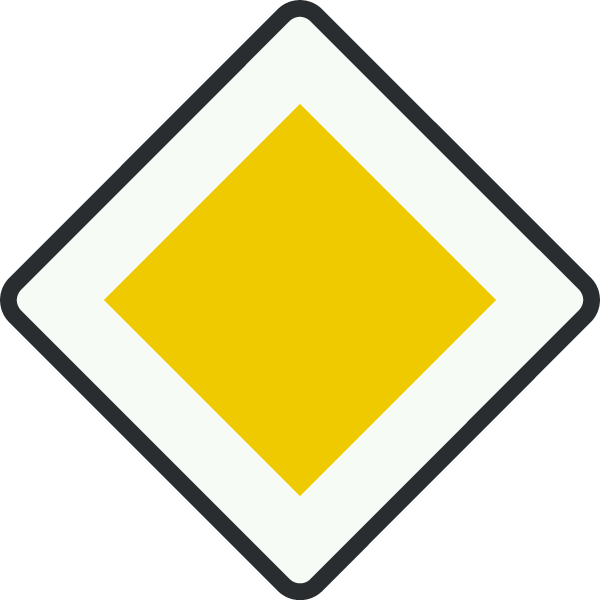
Right of way
This sign grants right of way on the entire road until a cancellation sign is encountered (sign B2). Applies only to drivers. Not pedestrians.
-

Right of way at intersection
Right of way only at the intersection where the sign is placed. This sign is triangle and red which indicates that this is a warning sign. Eventhough this sign grants the right of way, drivers should always approach the intersection with caution and reduce speed.
-
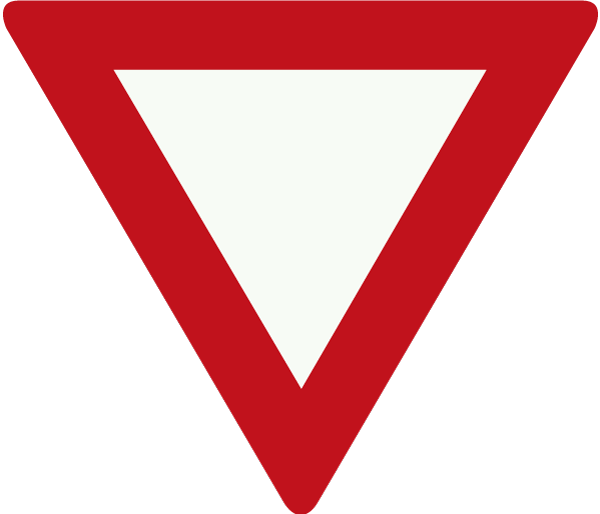
Give right of way
Give right of way to drivers crossing the road. This sign is usually placed at intersections and roundabouts. Drivers must stop and allow traffic on the main road, crossing or roundabout to proceed. This applies only for drivers, not pedestrians.
-
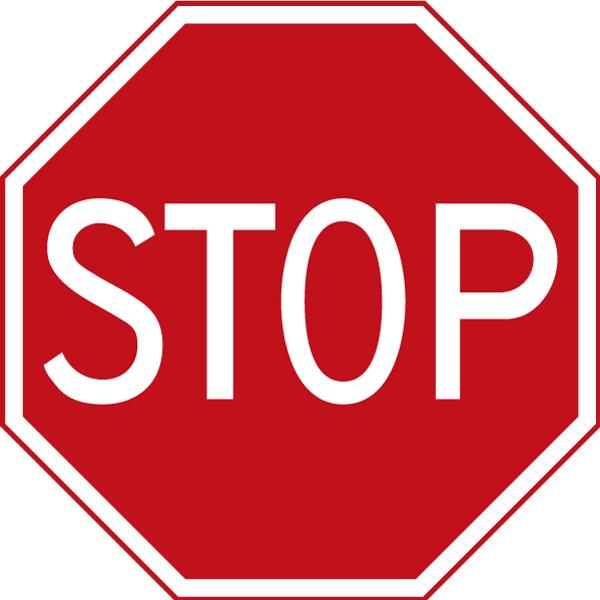
Stop and give the right of way to drivers
Stop and give the right of way to drivers crossing the road. This sign is similar to sign B4. It’s usually seen at large crossings, intersections or roundabouts that are considered to be of high-risk with low visibility. This applies only to drivers, not pedestrians.
-
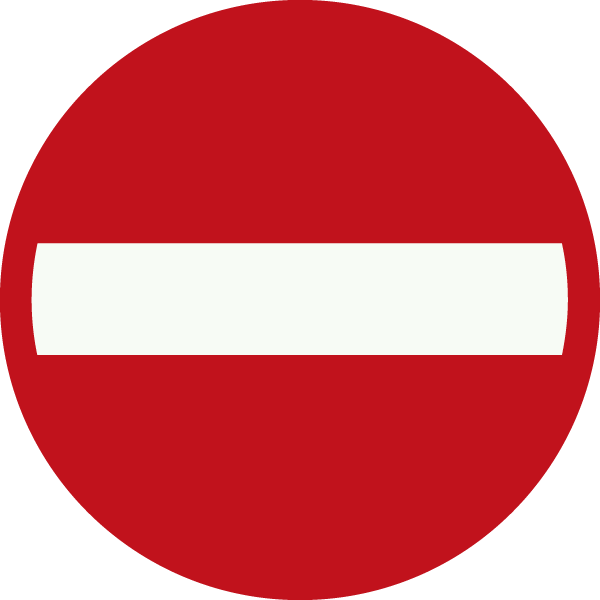
The road is closed to all vehicles
The road is closed to all vehicles from both directions. Only pedestrians are allowed to enter. Examples of this sign can be found in the parkinglot of Arubus implying that it’s forbidden to enter. In this case only busses of Arubus are allowed to enter. Another example is at ...
-
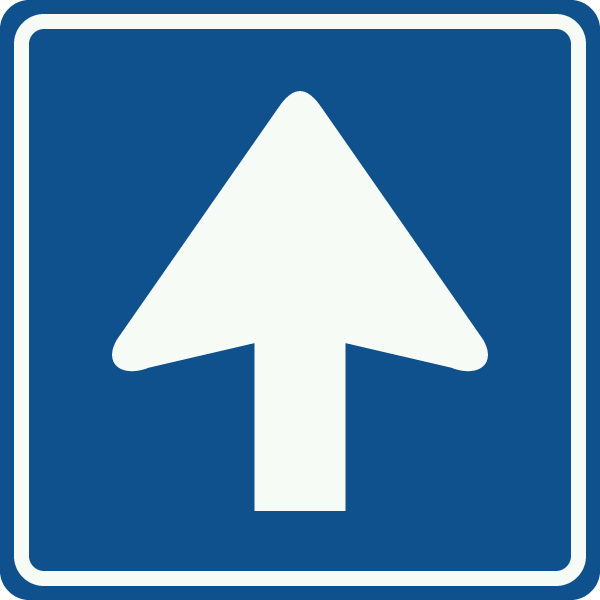
One way street
This sign indicates the entry point for a one- way road. All vehicles may enter from this side. Important: Once entered, reversing or making a U-turn is not allowed.
-
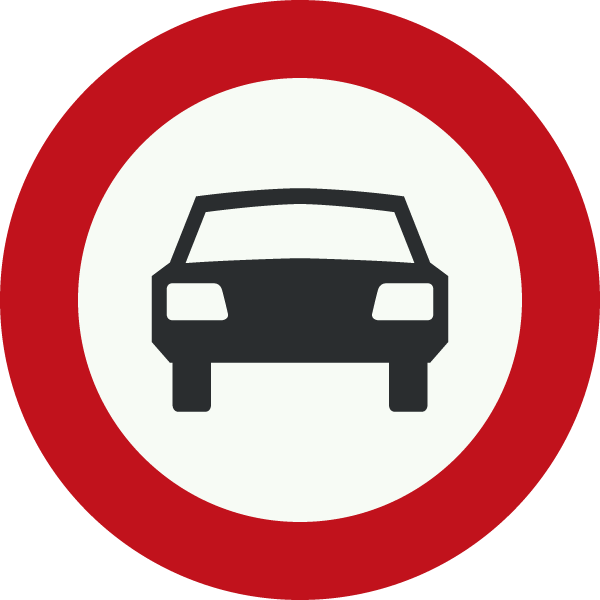
Entry is prohibited for vehicles
This sign prohibits access to all motor vehicles with three or more wheels.
-

Obligation signs
This sign indicates a roundabout. The direction is mandatory. Drivers must follow the indicated direction. If the driver takes the other direction other than what is shown on the sign, the driver will be running into opposite traffic. (it is dangerous and may lead to head on collision.
-
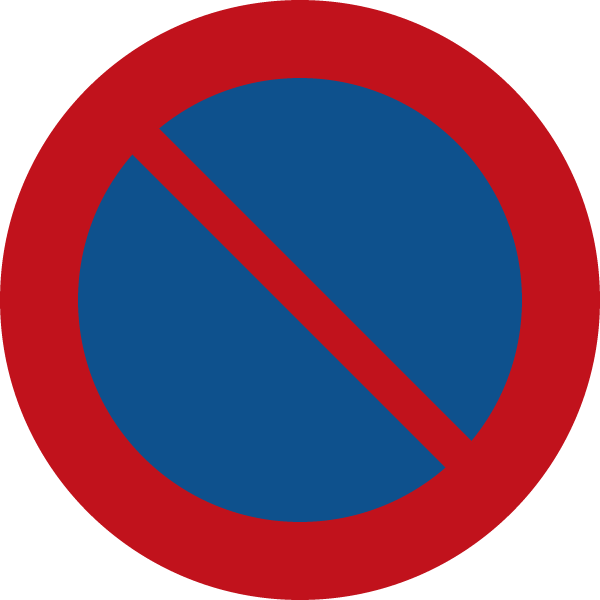
Parking is prohibited
Parking is prohibited on the side of the road where the sign is placed, except in designated parking areas. Drivers may briefly stop to pick up or drop off passengers or goods, but not park.
-
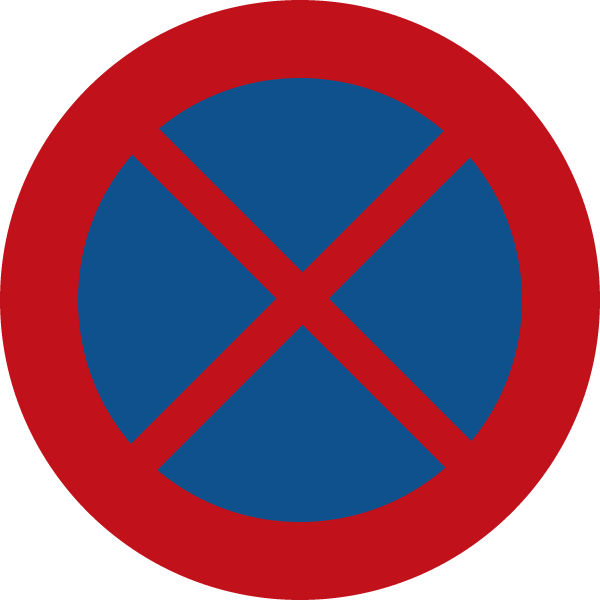
No stopping
Stopping is not allowed at all on the side where the sign is posted, except in clearly marked parking areas.
-

Pedestrian crossing
This sign marks a crosswalk. Pedestrians have the right of way. The road is marked with black and white lines on the road indicating where the pedestrian should cross.
-
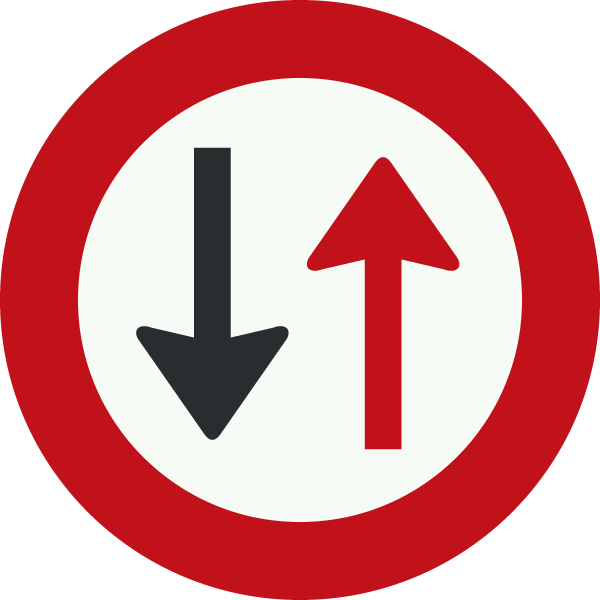
Give right of way to oncoming traffic
On narrow roads where two vehicles cannot pass at the same time, drivers must give the right of way to oncoming traffic. Wait until the road is clear before continuing.
-
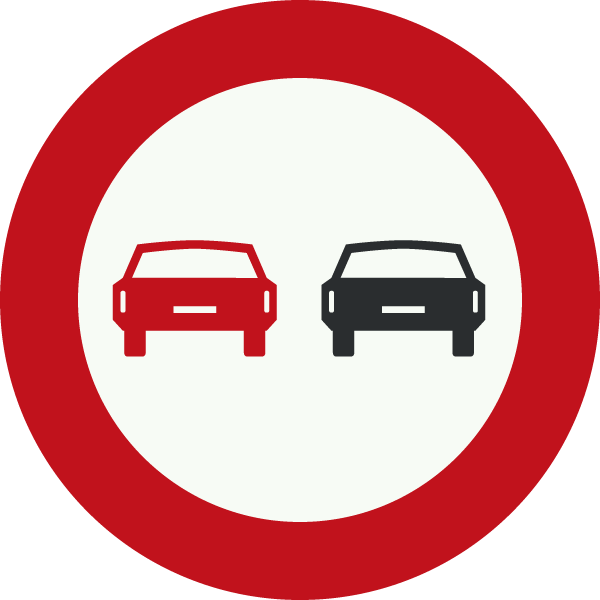
Not allowed to overtake
Motor vehicles with 3 or more wheels are not allowed to overtake other motor vehicles with 3 or more wheels. However, auto (3 or more wheels) can overtake a bike (2 wheels) and vice versa.
-

U-turn are prohibited
U-turn are prohibited at locations marked with this sign. However, just because there aren’t U-turn signs everywhere, doesn’t mean that drivers are allowed to do it. Take into account that lines on the road can not be crossed and always keep in mind that traffic cannot be endangered.
-
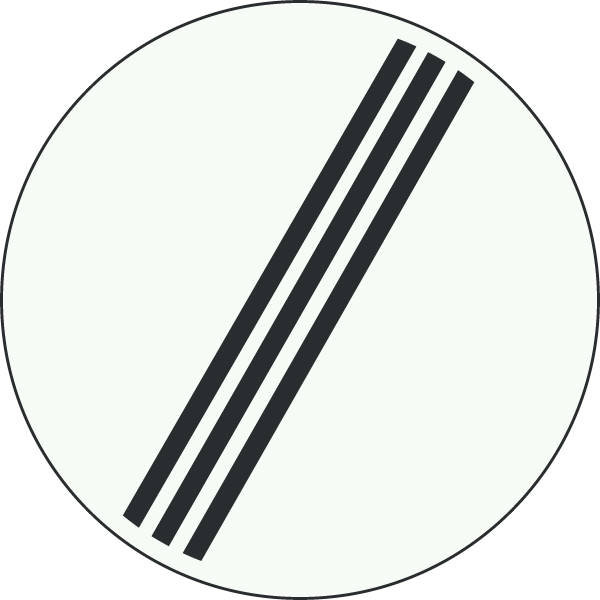
End of all prohibition
This sign indicates that all previous restrictions are lifted. It is typically represented by three diagonal white lines. Take for example signs A1, F2, and F4.
-

Mandatory bicycle path
Bicycles must use the designated path shown by the sign and may not continue riding on the road. Cyclists should keep as far to the right as possible. This sign is commonly seen along Green Corridor and Watty Vos Boulevard.
-
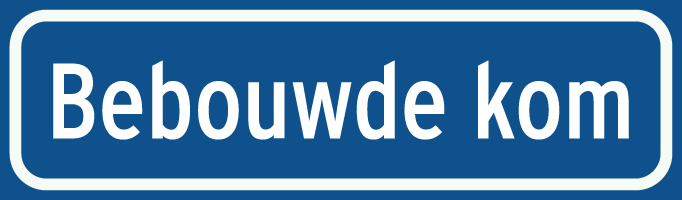
Inhabited area
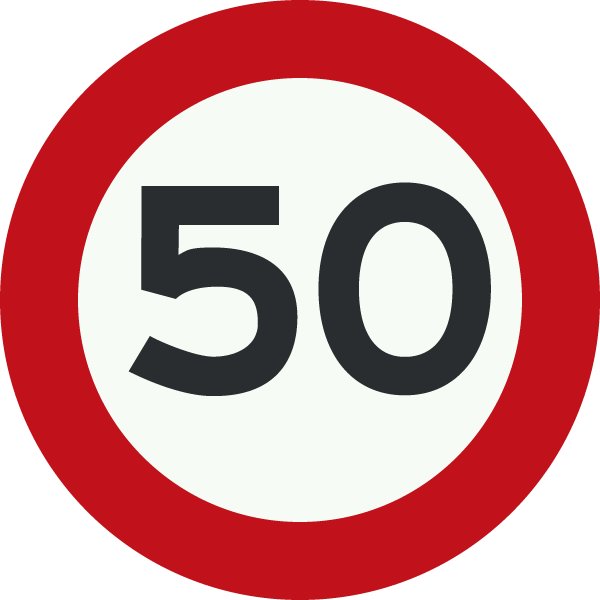
Indicating entry to populated zones. These can be seen in two areas of Aruba: San Nicolas and Oranjestad. In these areas drivers must not exceed 50 km/h, cannot use high beams and should avoid loud vehicle noises.
-
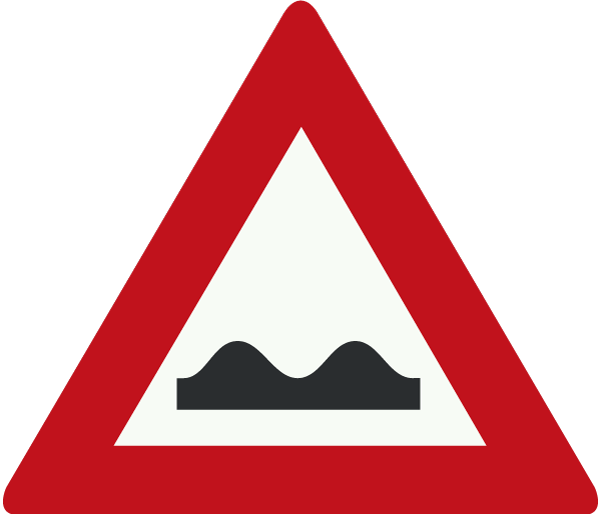
Poor road surface
Poor road surface. Reduce speed. The road is in bad condition or under construction.
 English
  Papiamento
  Español